⚡ Quick Bites (TL;DR)
- Instant Approvals: Top Indian banks now offer 100% digital loan processing for two-wheelers, providing instant approvals if you maintain a strong credit history.
- Hidden Interest Rates: Always compare the exact reducing balance interest rate rather than falling for the dealership’s confusing flat-rate EMI calculations.
- Clean Legal Record: Banks will instantly reject your vehicle finance application if your profile is flagged with severe unpaid RTO traffic fines.
Purchasing a premium motorcycle or a daily commuter scooter is a significant financial decision for millions of Indians. Fortunately, securing the best two-wheeler loans and EMI offers has never been more digitally accessible, thanks to modern banking apps.
However, navigating the complex world of bank interest rates, hidden processing fees, and mandatory dealer insurance can be incredibly overwhelming. Being financially literate is the only way to avoid overpaying for your dream vehicle.
Mizanur’s Finance Hack: The Zero Downpayment Illusion
Here is a massive insider secret that dealership finance agents use to trap new buyers. They will aggressively push “100% Zero Downpayment” vehicle finance options to make the deal look incredibly attractive. Do not fall for this trap!
When you opt for zero downpayment, the bank secretly inflates your overall interest rate and forcefully bundles an expensive, basic third-party liability policy into the loan amount. You end up paying thousands of rupees extra in interest over three years. Always pay at least 20% upfront as a downpayment. This instantly drops your EMI burden and gives you the absolute freedom to negotiate your own premium zero-depreciation cover from an outside insurer at a much lower cost.
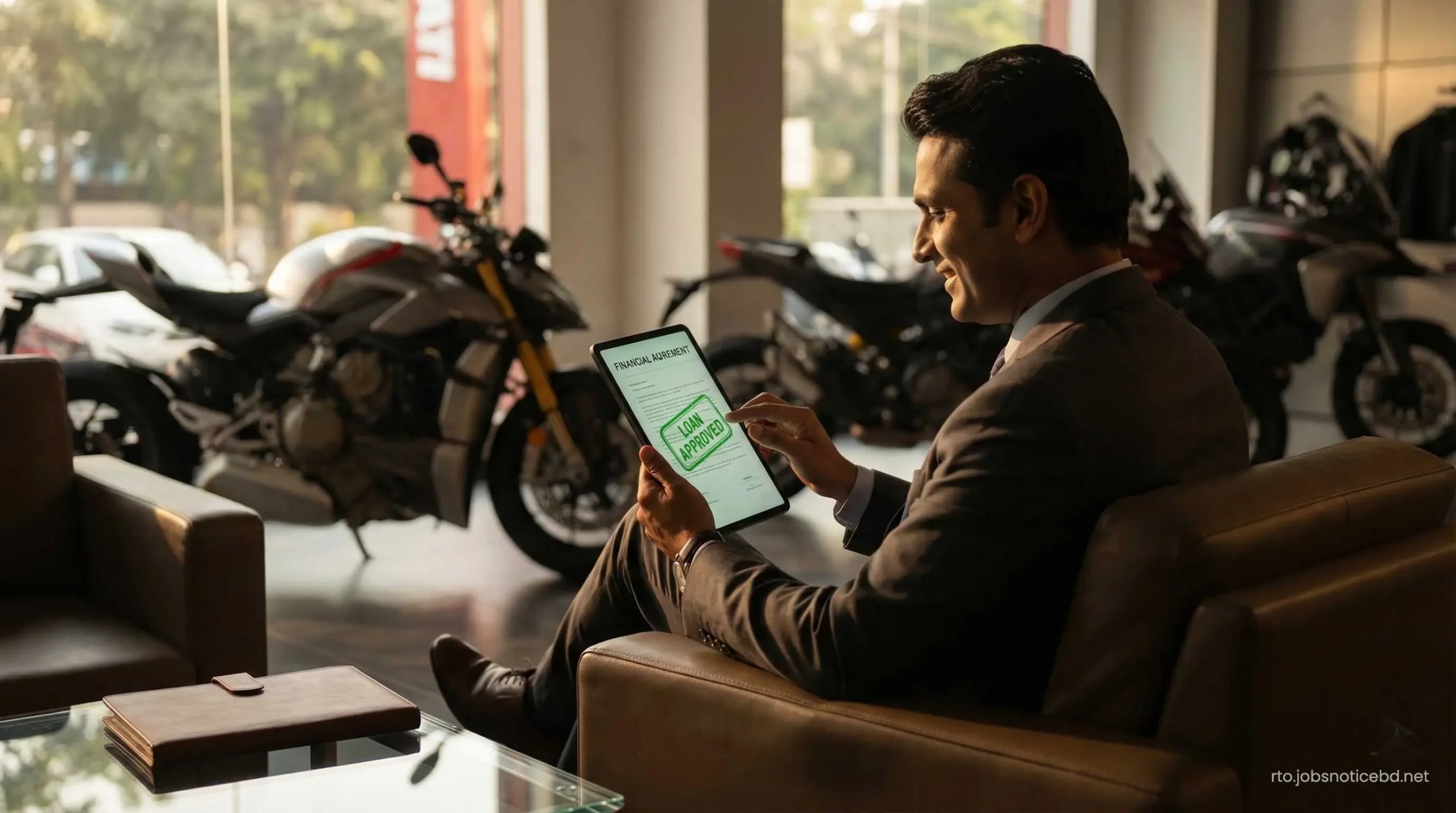
How RTO Records Impact Your Loan Approval
Before any major bank disburses a two-wheeler loan lowest EMI deal, their risk assessment algorithms strictly scan your legal and financial background. This is where your driving history plays a silent but crucial role.
If you are upgrading from an old scooter to a new bike, unresolved legal disputes on your previous vehicle act exactly like a poor CIBIL score. Smart buyers always utilize the official mParivahan app guide to ensure their current vehicle documents are absolutely clear of any government red flags.
If you discover any hidden penalties, immediately initiate the online e-challan check and payment process before submitting your fresh loan application to the bank.
Insurance Requirements for Financed Vehicles
Banks mandate that any financed vehicle must be fully insured before it leaves the showroom floor. Dealerships use this strict rule to force buyers into accepting highly inflated, long-term insurance packages.
To save a massive amount of money, you should independently apply proven two-wheeler insurance renewal hacks and purchase your comprehensive policy directly from online aggregators like PolicyBazaar.
By purchasing the policy yourself, you can comfortably use exclusive credit card offers to pay the premium. This strategy not only guarantees a much cheaper motor insurance renewal rate in the future but also ensures your newly financed bike has the maximum possible financial protection.
Frequently Asked Questions
What is the minimum CIBIL score required for a two-wheeler loan?
While some non-banking financial companies (NBFCs) might approve loans for lower scores, top Indian banks generally require a minimum CIBIL score of 700 to 750 to offer their lowest and most competitive interest rates for vehicle finance.
Can I get a bike loan without submitting income proof?
Yes, many premium banks offer “pre-approved” two-wheeler loans to their existing salary account holders or users with an excellent credit card repayment history, completely bypassing the need for heavy physical income documentation.
Is it better to take a loan from a bank or the showroom dealer?
It is almost always financially superior to secure a loan directly from a reputed nationalized or private bank. Showroom dealers often act as middlemen for NBFCs, secretly adding hidden processing fees and inflating the final interest rate for their own commission.